Shifts in what people type into search engines offer a candid view of sexual interest, and mental health professionals read those shifts as psychological signals rather than curiosities. The words people choose, and how often they return to them, can reflect distress, habit, or avoidance of intimacy. Because porn search keywords are typed in private, they sometimes reveal concerns that patients disclose only later, if at all.
Why Do Pornography Search Patterns Shift Over Time?
Pornography search patterns shift because sexual interest is shaped by changing social norms, internet access, and the emotional functions that viewing serves for each person. Aggregate shifts therefore mix at least two different movements: fewer people using pornography at all, and a smaller group using it far more heavily.
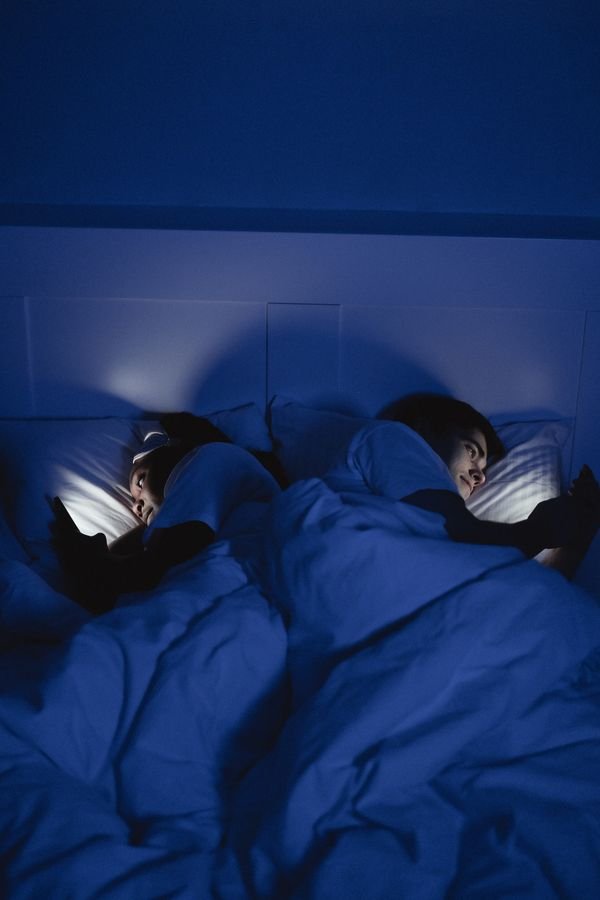
Late-night private searches leave a statistical trace of a hidden behavior — Photo: SHVETS production / Pexels
A nationally representative survey of Swedish high-school students followed three waves, in 2004, 2009 and 2014, and asked about lifetime and current pornography use. The questionnaires asked about lifetime use and about current frequency separately. Across those years, overall lifetime prevalence of pornography use declined. Fewer students in each successive cohort reported having viewed pornography at any point, which is the opposite of what a simple story about rising exposure would predict.
That overall decline concealed a divergence. The share of boys reporting daily use rose from 11% in 2004 to 24% in 2014. Among girls, the share reporting never having used pornography rose from 40% in 2004 to 51% in 2014. The group that continued to use did so more intensively, while a growing share of girls moved away from use entirely.
One reading is that pornography became more optional for many young people as other social and digital activities competed for attention, while for a smaller, more engaged group it became a routine. The pattern also suggests that an average can hide opposite trends occurring in different subgroups at the same time. This study covers only Swedish high-school students across three specific years and does not generalize to other countries or to years after 2014.
How Common Is Pornography Use in the General Population?
General-population estimates of pornography use vary with the wording of the question and the country surveyed. The Swiss survey did not measure an overall national lifetime-use rate; the more clinically relevant figure it offers is the share of regular users who describe their own pattern as problematic.
A Swiss national survey of adults collected data in 2023 and 2025. In 2025, 22.2% of regular pornography users reported a problematic pattern of use. That rate rose compared with 2023, and it was higher among men than among women. The figure comes from a self-report screening tool rather than a clinical assessment, and it reflects only the population of Switzerland. Because the tool asks people to rate their own behavior, respondents who are distressed for other reasons may also score higher. A screening result identifies a self-reported pattern of difficulty; it does not by itself establish that a person meets criteria for a disorder.
Is Preferring Pornography Over a Real Partner Linked to Erectile Dysfunction?
The association is strong in the one clinical sample that measured it, but the design cannot establish which came first. Men who preferred pornography over partnered sex were far more likely to report erectile dysfunction than men who preferred partnered sex without pornography.
The data come from patients aged 20-40 attending a US military urology clinic. Among men who preferred partnered sex without pornography, 22.3% had erectile dysfunction. Among men who preferred pornography over partnered sex, the share rose to 78%, and the difference was statistically significant, at p = 0.001. Preference was assessed by self-report as well. This is a correlational study of clinic patients, not a trial; it shows an association and not definitive causation. The sample is specific to a clinical setting, so these percentages describe those patients rather than men in general.
What Does a Psychoanalytic Perspective Add?
A psychoanalytic perspective treats the content of a fantasy as less informative than the function it serves. Freud described fantasy as a compromise between a wish and the anxiety it provokes, and he noted that fantasy can protect a person from the risks of an actual relationship.
A clinical conversation about what a behavior does, not a label for it
In this reading, solitary viewing is not the central issue. What matters clinically is whether fantasy becomes a substitute for the uncertainty and mutual exposure that a relationship with another person requires, and whether secrecy around it adds shame that then feeds further avoidance. A person may find in pornography a reliable, controllable partner who makes no demands, which can make the unpredictability of an actual partner feel harder to tolerate.
Clinicians working psychodynamically rarely meet patients who ask about frequency alone. Among people who discuss their pornography-viewing patterns with psychoanalytically informed clinicians, a common pattern emerges: the concern is not consumption itself, but when it substitutes for a real relationship or becomes bound up with guilt and secrecy. That distinction usually determines what gets explored.
This site never cites data from a pornography platform itself as scientific evidence; every number in this article comes from peer-reviewed academic research.
Needs further review: whether the pattern of declining overall prevalence alongside rising daily use among remaining users also holds in populations outside Sweden and Switzerland.
No. In a Swiss national survey, 22.2% of regular pornography users reported a problematic pattern of use in 2025, so most regular users did not screen positive. Use alone is not a diagnosis.
Why do search patterns shift over time?
Social norms and internet access change, and groups can move in opposite directions. In a Swedish survey of high-school students, daily use among boys rose from 11% in 2004 to 24% in 2014, while girls reporting never having used rose from 40% in 2004 to 51% in 2014.
Is preferring pornography over a real partner risky?
In a US military urology clinic sample of patients aged 20-40, 22.3% of men who preferred partnered sex without pornography had erectile dysfunction, compared with 78% of men who preferred pornography over partnered sex. This is an association, not proof of causation.
What should a couple do when one partner’s pornography use has become a problem?
Couples often benefit from an open, non-blaming conversation and an assessment of the pattern rather than the content. Since 22.2% of regular pornography users in a Swiss survey reported a problematic pattern in 2025, the useful question is how use affects the relationship.
Shifting patterns are not a verdict on anyone’s character. They are information about what people want, what they fear, and what they have learned to expect from closeness. Clinicians who ask about pornography without moralizing tend to hear something more useful than a frequency count: a person trying to manage desire, loneliness, or shame. That is workable material, and it responds to attention, honesty, and time.
Looking for professional support with your relationship or mental health?
Donevan M, Jonsson L, Bladh M, Priebe G, Fredlund C, Svedin CG. Adolescents’ Use of Pornography: Trends over a Ten-year Period in Sweden. Arch Sex Behav. 2021. https://doi.org/10.1007/s10508-021-02084-8 (PMID: 34750776)
Mader S, Marmet S. The Problematic Behaviour Scale (PBS-5): A brief measure for the population-level screening of non-substance-bound addictive behaviours and Swiss national prevalence rates. J Behav Addict. 2026. https://doi.org/10.1556/2006.2025.00120 (PMID: 41860608)
Berger JH, Kehoe JE, Doan AP, Crain DS, Klam WP, Marshall MT, Christman MS. Survey of Sexual Function and Pornography. Mil Med. 2019. https://doi.org/10.1093/milmed/usz079 (PMID: 31132108)