Loss aversion describes the tendency of the human mind to weigh a loss more heavily than an equivalent gain; the same asymmetry operates among senior executives and fund managers as it does in experimental gambling tasks. In a 2026 meta-analysis of brain imaging studies by Arioli et al., loss aversion coefficients ranged from 1.12 to 2.20, with an overall mean of 1.71—meaning a one-unit loss carries roughly the weight of 1.7 units of gain.
For a chief executive, portfolio manager, or investor who repeatedly chooses between protecting existing value and pursuing additional return, that coefficient is operationally significant.
What Does the Brain Do When Choosing Between Gains and Losses?
Tom et al. (2007) asked participants to accept or reject 50/50 gambles. As the potential gain grew larger, activity increased in midbrain dopaminergic regions and their targets. Potential losses were represented by decreasing activity in those same regions. Crucially, each person’s behavioral loss aversion could be predicted from neural loss aversion in the ventral striatum and prefrontal cortex.
In plain language, the brain does not run two separate accounts for gains and losses. It runs a single scale whose loss pan is calibrated more heavily. That same scale helps explain why selling a losing asset or closing an underperforming project feels harder than taking a fresh gain—even when the arithmetic is clear—and why a sound opportunity is sometimes declined simply because a chance of loss is visible.
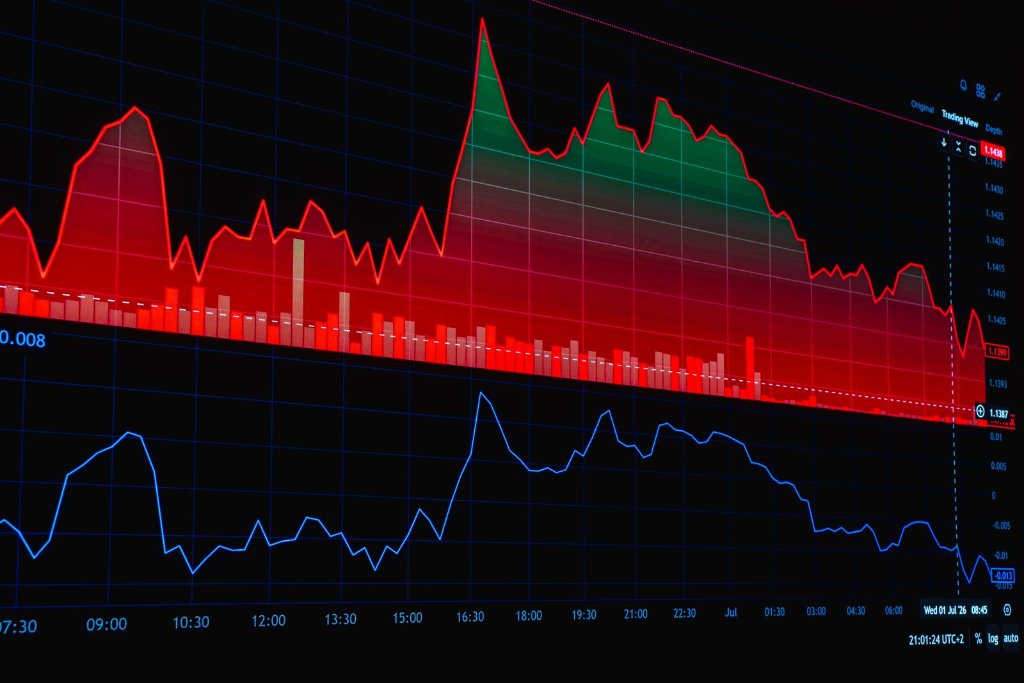
A decline that looks brief on a chart can feel far longer in the decision-maker’s mind — Photo: Rafael Minguet / Pexels
Is the Amygdala a Brake or One Voice Among Several?
In a rare study, De Martino et al. (2010) examined two individuals with focal bilateral amygdala lesions. Both showed normal responses to expected value and risk, but their loss aversion was dramatically reduced compared with matched controls. The authors described the amygdala as a cautionary brake against potentially harmful actions. Because the study involved only two participants, its findings should be generalized with caution.
Later evidence complicated the picture. Canessa et al. (2013), studying 56 participants and 104 mixed gambles, found that the amygdala and posterior insula tracked the magnitude of potential losses. However, the 2026 meta-analysis by Arioli et al. did not find consistent evidence for an amygdala role; instead, it identified the striatum, anterior insula, and dorsal anterior/middle cingulate as the shared neural core. The authors suggested methodological limitations likely contributed to this negative result. [needs further research: the exact role of the amygdala is still debated.]
The takeaway for senior decision-makers is that loss aversion results from the integration of emotion and calculation, not from a simple error that more information would erase.
What Does Psychoanalysis Say, and How Can Leaders Rebalance the Scale?
In Inhibitions, Symptoms and Anxiety (1926), Freud tied the child’s anxiety to being alone and separated from a loved figure. He wrote: “anxiety appears as a reaction to the felt loss of the object” (Freud, 1926, Inhibitions, Symptoms and Anxiety, SE 20). From this perspective, financial loss is not merely a number for many executives; it can echo older fears of losing an object, which is why it may assume a weight beyond its actual share.
In loss-aversion experiments the gamble is fifty-fifty, yet the mind does not experience it as fair — Photo: Anna Shvets / Pexels
Sokol-Hessner et al. (2013) found that behavioral loss aversion correlated with amygdala responses to losses. When participants used perspective-taking to view each choice as one decision among many in a larger portfolio, successful regulation of loss aversion was accompanied by reduced amygdala responses to losses, but not to gains. In practice, judging a single decision alongside similar decisions, and separating the fear of losing from the assessment of risk, can produce a fairer calibration.
Conclusion: Losses Cannot Be Removed, but Their Weight Can Be Judged Correctly
Loss aversion appears to be part of the brain’s architecture and reflects what De Martino and colleagues describe as mechanisms organisms evolved to evaluate and avoid losses. A leader who recognizes the bias can ask, before a major decision, which portion of hesitation reflects risk assessment and which portion reflects an older fear of loss. That distinction, by itself, can improve the quality of the decision.
Looking for professional support with your relationship or mental health?
Tom SM, Fox CR, Trepel C, Poldrack RA. The neural basis of loss aversion in decision-making under risk. Science. 2007;315(5811):515-8. PMID: 17255512 · DOI: 10.1126/science.1134239
De Martino B, Camerer CF, Adolphs R. Amygdala damage eliminates monetary loss aversion. Proc Natl Acad Sci U S A. 2010;107(8):3788-92. PMID: 20142490 · DOI: 10.1073/pnas.0910230107
Canessa N, Crespi C, Motterlini M, et al. The functional and structural neural basis of individual differences in loss aversion. J Neurosci. 2013;33(36):14307-17. PMID: 24005284
Sokol-Hessner P, Camerer CF, Phelps EA. Emotion regulation reduces loss aversion and decreases amygdala responses to losses. Soc Cogn Affect Neurosci. 2013;8(3):341-50. PMID: 22275168 · DOI: 10.1093/scan/nss002
Arioli M, Colletti MPM, Cattaneo Z, et al. Mapping the functional neurocognitive correlates of loss aversion: A coordinate-based meta-analysis. Neurosci Biobehav Rev. 2026;191:106937. PMID: 42674197 · DOI: 10.1016/j.neubiorev.2026.106937
Freud S. Inhibitions, Symptoms and Anxiety (1926). Standard Edition, Vol. 20. London: Hogarth Press.
Image Credits
Featured image: Photo: Andrea Proch / Pexels · In-text images: Photo: Rafael Minguet / Pexels · Photo: Anna Shvets / Pexels