What Prolonged Desk Sitting Does to the Lower Back
Prolonged sitting holds the spine in a flexed posture and keeps lumbar tissues under a static load for long stretches. A randomized controlled trial protocol in university students aged 18 to 25 links prolonged sitting in flexed posture to low back pain and musculoskeletal discomfort. The posture itself is normal; the absence of interruption is what accumulates.
In flexion, the lumbar spine loses part of its natural curve. Discs and posterior ligaments carry load in a position they were not built to hold indefinitely, while the lumbar extensor muscles stay active at a low, continuous level to keep the trunk from folding further. Hip flexors remain short because the hips stay flexed, and the gluteal muscles are asked to contribute relatively little.
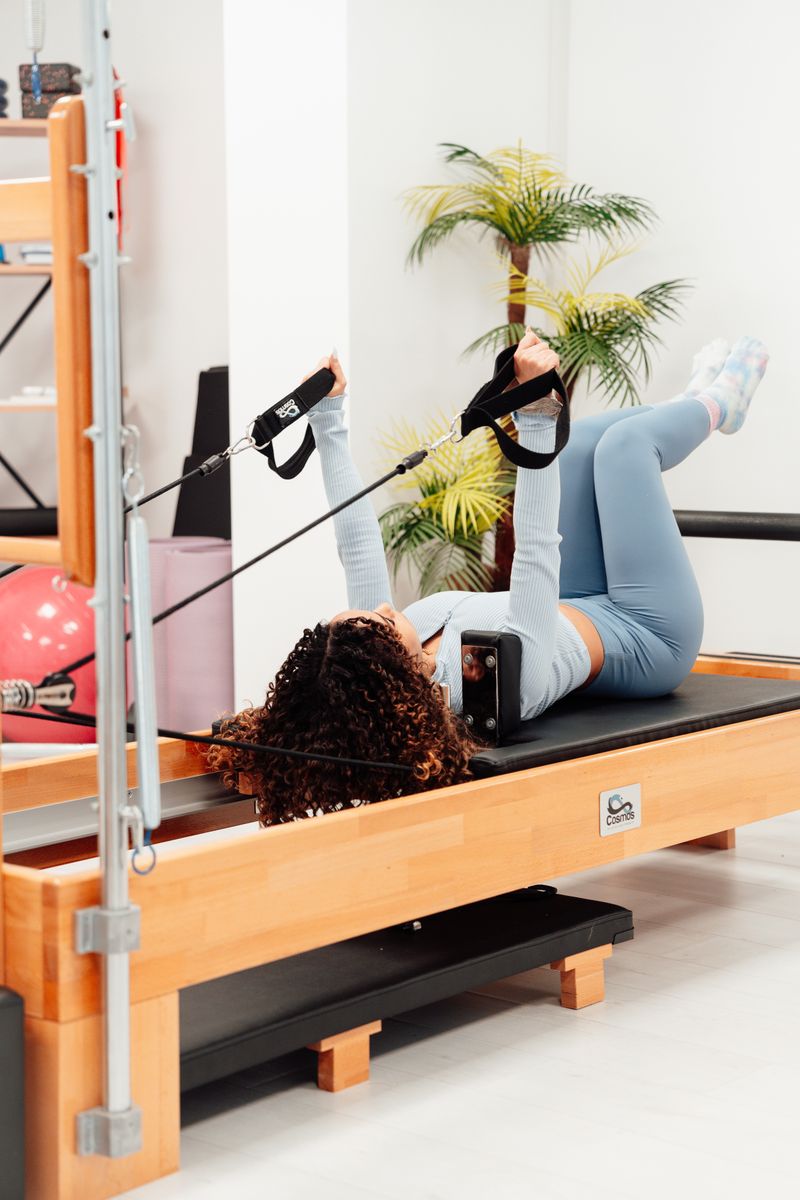
— Photo: Ahmet Kurt / Pexels
None of this damages tissue in a single afternoon. The clinical concern is the cumulative pattern: most of the working day spent seated, most days, without restoring extension or interrupting the load. Discomfort usually appears as a dull ache or stiffness in the lower back, a sense of tightness across the front of the hips, and difficulty straightening up fully after a long session. Symptoms that ease when you move are a useful signal that tissue is responding to posture and duration rather than to injury.
The trial protocol referenced above is designed to test whether interrupting that pattern changes outcomes. A protocol sets out what researchers intend to measure and how; it is the blueprint for a study, not the finished proof. It is best read as a well-defined hypothesis with a plausible mechanism rather than a settled verdict on desk work.
Does Sitting Really Cause Gluteal Atrophy or ‘Flat Butt Syndrome’?
Direct scientific evidence on gluteal muscle atrophy itself remains limited. The two findings summarized in this article concern low back pain and lumbar muscle oxygenation; neither measures gluteal size, gluteal strength, or gluteal cross-sectional area. The popular term describes a pattern people notice, but it is a colloquial label rather than a measured diagnosis.
— Photo: Vika Glitter / Pexels
What people interpret as flattening is often a combination of pelvic position, standing posture, and body composition. Those factors are visible in a mirror and are not what the studies above examined. Muscle tissue does respond to disuse in principle, and hip musculature is certainly less active during a seated workday than during walking or climbing stairs. What is missing is direct measurement showing that desk sitting produces gluteal atrophy as a distinct clinical entity, and the evidence described here cannot be stretched to support that claim.
The honest middle position is this: the lower back data should not be repackaged as glute data, but the hip region still matters. Hip extension capacity contributes to the same movements that protect the lumbar spine, and it is trainable. Skepticism about the label is not a reason to ignore the muscle group.
Why Lumbar Muscle Oxygenation Drops During Sustained Sitting
A study using near-infrared spectroscopy to measure lumbar erector spinae oxygenation found reduced oxygenation even at very low isometric contraction levels, specifically at 2% of maximum voluntary contraction. That means the muscle was barely working by any strength standard, and its oxygen supply still fell. Static posture, not heavy effort, is the constraint.
Near-infrared spectroscopy estimates oxygen availability in tissue non-invasively by measuring how light is absorbed. Maximum voluntary contraction is the benchmark for a person’s strongest possible effort in a given movement, so 2% of that value represents an almost passive hold. The finding matters because it removes strength from the explanation: the muscle is not failing from overload, it is struggling to get oxygen while doing very little.
The mechanism is mechanical. A sustained contraction raises pressure inside the muscle, compresses the small vessels running through it, and limits local blood flow. The muscle keeps consuming oxygen while delivery drops, so the balance tips toward an oxygen deficit. The practical result is earlier fatigue, a dull ache, and reduced endurance across a long day of static work.
This reframes the problem. Prolonged sitting is not metabolically trivial for the lumbar extensors; it is a sustained low-level task carried out under constrained oxygen supply. That is why movement that restores blood flow and takes the spine out of flexion tends to feel different from simply sitting up straighter.
How This Connects to Stamina During Sexual Activity
Sexual activity makes real physical demands on the lumbar extensors and hip extensors: sustained hip extension, pelvic control, and trunk stabilization while holding a position. These are the same muscles desk sitting leaves under-conditioned and under-perfused. When their endurance is low, positions that require holding, kneeling, or repeated hip movement become tiring sooner.
The link here is a mechanical argument, not a finding from the studies above; no research cited in this article measured sexual function. But the muscles involved and the type of demand overlap closely. If the lower back already aches or fatigues at the end of a workday, it is likely to fatigue during sex as well, and the load tends to shift to the lumbar spine, which is where pain already concentrates.
Low endurance changes behavior as much as it changes sensation. People avoid positions, pause more often, or stop earlier because of tightness rather than lack of interest. That is a musculoskeletal limitation being experienced as a relational one, and it responds to the same training that supports the lower back during desk work: graded hip extension work, trunk endurance, and fewer uninterrupted hours seated.
It is worth keeping the frame modest. This is about comfort, tolerance, and control rather than performance benchmarks. A better-conditioned posterior chain widens the range of positions that remain comfortable for longer, which matters more to most people than any measure of strength.
The 30-Minute Active Break: What It Is and How to Do It
In the trial protocol, the intervention group took an active break with lumbar and hip extension exercises every 30 minutes of sitting. The purpose is to interrupt the flexed position before tissue load and reduced oxygenation accumulate, then restore extension and circulation. It is a scheduled movement habit, not a stretch you reach for once the ache becomes noticeable.
Execution is straightforward. Set a timer that repeats through the working day. When it sounds, stand and move the spine and hips in the direction that sitting denies them: gentle extension of the lower back, hip extension work such as standing glute activation, and lengthening of the hip flexors. A short walk to refill a glass of water counts as part of the break, not as a substitute for it.
Frequency matters more than intensity. A brief, repeatable break every 30 minutes is easier to sustain than a longer routine attempted twice a day, and it matches the interval the protocol specifies. If you work in an office, a corridor, stairwell, or the space behind your chair is enough. One caveat belongs here: because the source is a trial protocol, whether this exact schedule reduces pain is still being tested, not established.
Habits hold better when they are anchored to something that already happens. Attach the break to the end of a call, a timer, or a recurring task rather than to pain, and perform it whether or not you feel discomfort, since pain is a late signal rather than an early one. Reducing total seated time where your schedule allows adds to the effect rather than replacing the break habit.
When Desk-Related Back Pain Needs Assessment
Most posture-related back discomfort is manageable with movement and load changes, but some symptoms need clinical assessment rather than a home routine. Seek evaluation if pain persists rather than settling, radiates below the knee, comes with numbness, tingling, or weakness in a leg, follows a fall or injury, or is accompanied by changes in bladder or bowel control.
An assessment typically examines movement, strength, and posture, and considers whether symptoms fit a mechanical pattern that responds to load modification. Ongoing pain that limits sleep or work also deserves attention, because persistent pain involves more than posture alone and may require a graded program rather than general desk advice.
The takeaways are narrow and practical. Break up sitting with extension-based movement every 30 minutes. Train hip and trunk endurance rather than chasing a cosmetic label. Treat lower back pain that does not settle as a reason to be assessed rather than a reason to sit still. And when you read claims about sitting and gluteal muscle loss, check what was actually measured: in the evidence summarized here, it was pain and lumbar muscle oxygenation, not glute size.
Plandowska M, et al. The Effect of an Active Break Intervention on Nonspecific Low Back Pain and Musculoskeletal Discomfort during Prolonged Sitting among Young People. J Clin Med. 2024. DOI: 10.3390/jcm13020612
McGill SM, Hughson RL, Parks K. Lumbar erector spinae oxygenation during prolonged contractions. Ergonomics. 2000. DOI: 10.1080/001401300184369