No, teenagers cannot assume a nicotine-free label means zero nicotine. Goniewicz et al. (2015) found nicotine traces in 3 US e-liquids labelled nicotine-free among 91 products bought in the United States, South Korea, and Poland in 2013 to 2014; Simões et al. (2025) detected nicotine even in samples labelled nicotine-free among 20 Brazilian e-liquids. Those laboratory measurements describe only the tested products, not the whole market, but they show that a label claim can fail. For a teenager deciding what to inhale, the phrase carries more uncertainty than it appears to carry.
Does “nicotine-free” on a label mean zero nicotine?
No. Goniewicz et al. (2015) found nicotine in 3 US products labelled nicotine-free among 91 e-liquids from 3 countries, and Simões et al. (2025) found detectable nicotine even in samples labelled nicotine-free among 20 Brazilian e-liquids. Neither laboratory study shows whether the traces found in nicotine-free products are enough to cause dependence.
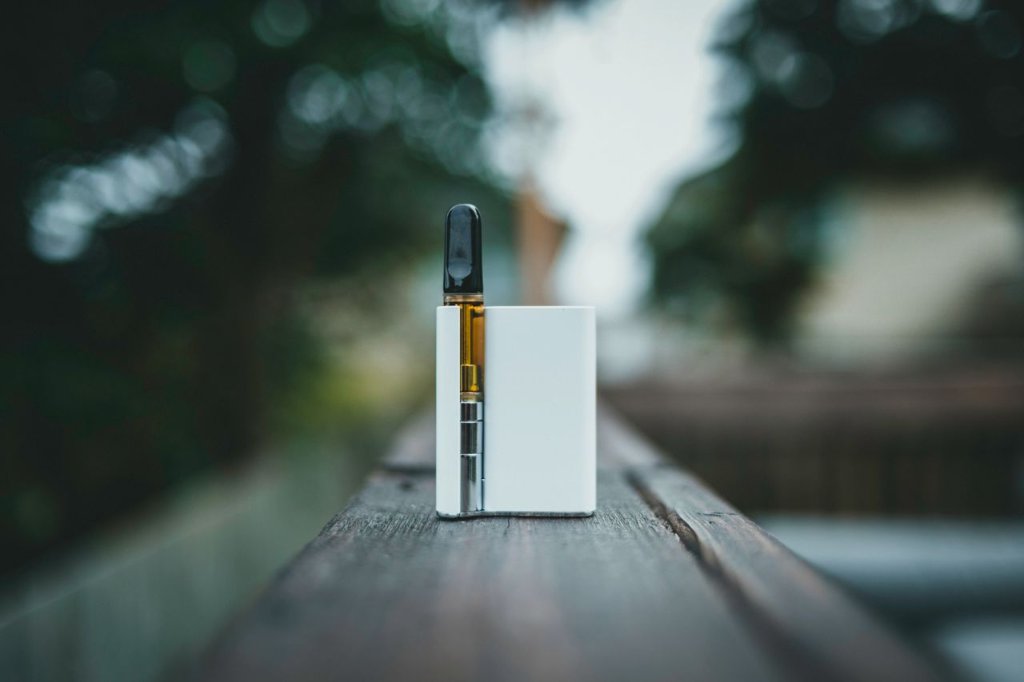
What the label says and what the laboratory measures are not always the same — Photo: Jonathan Cooper / Pexels
Goniewicz et al. (2015) measured nicotine in 91 e-liquids bought in 2013 to 2014: 32 from the United States, 29 from South Korea, and 30 from Poland. US products ranged from 0 to 36.6 mg/mL, and 3 US products labelled nicotine-free contained traces; two-thirds of South Korean products had no detectable nicotine and the rest ranged from 6.4 to 150.3 mg/mL, the highest labelled pure nicotine. Labelled and measured nicotine differed by more than 20% in 19% of all 91 analysed e-liquids. Caution: this work examined 91 products bought in 3 countries more than a decade ago; it cannot represent current products.
Simões et al. (2025) analysed 20 e-liquid samples sold in Brazil by chromatography. Measured nicotine ranged from 0.005 to 50.672 mg/mL, and even samples labelled nicotine-free contained detectable nicotine; several samples also contained contaminants and potentially hazardous compounds among about 673 compounds screened. It also tested only 20 samples from 1 country, and detectable is not the same as a dependence-causing dose. [Needs further verification: neither laboratory study shows whether the traces found in nicotine-free products are enough to cause dependence.]
How well do teenagers understand nicotine labels?
Teenagers and young adults often misjudge nicotine labelling. Morean et al. (2021) surveyed 821 adolescent and young-adult e-cigarette users and found that they correctly identified 5.92 of 18 nicotine strengths on average; errors generally underestimated nicotine strength, and the authors warn of unintended high-nicotine exposure.
Within the same 821 users, the average correct identifications were 3.47 with a standard deviation of 2.03 when strengths were labelled in mg/mL and 2.45 with a standard deviation of 1.38 when labelled as percent nicotine. When comparing 19 pairs of concentrations, they were right on average 7.58 times with a standard deviation of 5.88. One limit: this survey pooled adolescents and young adults who already used e-cigarettes, so it does not measure understanding in non-users or in adolescents alone. The authors also note that earlier work found young users are often unsure whether their e-liquid contains nicotine at all.
Our editorial position is clear: a “nicotine-free” label is not a guarantee, and a conversation with a teenager should be built on understanding dependence, not on prohibition alone.
Why is quitting vaping hard for teenagers?
Pbert et al. (2024) interviewed 11 adolescents from 1 Massachusetts high school who had vaped in the past 90 days. The reasons for wanting to quit included cost, feeling nic-sick from withdrawal or too much nicotine, worse mood, concentration or health, and symptoms of dependence; nearly all had tried to quit multiple times.
Barriers included exposure to vaping by others, easy access, stress, and appealing new products or flavours. Strategies these students described were avoiding others who vape, social support, handling peer pressure, learning from peers who quit, and distraction or alternatives. These are experiences of 11 students in 1 school, not a measure of which strategy is effective.
What helps quitting, and when should professional help be sought?
An automated text-message program built on social support and coping skills helped some young adults, but most still vaped. Graham et al. (2021) randomised 2588 US young adults aged 18 to 24 who wanted to quit within 30 days; 24.1% of 1304 program participants and 18.6% of 1284 assessment-only participants reported 30-day abstinence at 7 months.
The odds ratio for 30-day abstinence at 7 months was 1.39 with a 95% confidence interval of 1.15 to 1.68. Note that this trial included adults aged 18 to 24, not adolescents, used self-reported abstinence, recruited through social-media ads, and found that most participants still vaped despite the program.
As practical guidance, professional help is reasonable when a teenager cannot stop after repeated attempts, has withdrawal symptoms, or uses vaping to manage stress or low mood. In the clinical experience of specialists who work with adolescents and their families, a recurring pattern is that teenagers talk more honestly about vaping when the conversation starts with a question about how they feel rather than with a search of their belongings.
No. Simões et al. (2025) found that several samples contained contaminants and potentially hazardous compounds among about 673 compounds screened. The study does not say whether those were the nicotine-free samples, and 20 samples cannot establish harmlessness or harm.
Why do teenagers misjudge nicotine strength?
Morean et al. (2021) found that 821 adolescent and young-adult e-cigarette users correctly identified 5.92 of 18 nicotine strengths on average, and errors generally underestimated nicotine strength.
Why is quitting vaping hard?
Pbert et al. (2024) interviewed 11 adolescents at 1 Massachusetts high school who had vaped in the past 90 days. They described dependence symptoms, withdrawal, stress, peer exposure, easy access, and appealing products as barriers; nearly all had tried to quit multiple times.
Is there evidence for quitting by text message?
Graham et al. (2021) randomised 2588 US adults aged 18 to 24 and found 24.1% of 1304 text-message program participants reported 30-day abstinence at 7 months, versus 18.6% of 1284 assessment-only participants. This evidence is limited to young adults, not adolescents.
Conclusion: What can be said with confidence?
Confidence is possible on a narrow point: a nicotine-free label does not guarantee zero nicotine. Goniewicz et al. (2015) found nicotine traces in 3 US products among 91 e-liquids, and Simões et al. (2025) found detectable nicotine in some of 20 Brazilian samples; those numbers describe the tested products only. Teenagers often misread nicotine labels, quitting is hard because of dependence and stress, and text-message evidence exists for adults aged 18 to 24, not adolescents.
Looking for professional support with your relationship or mental health?
Goniewicz ML, Gupta R, Lee YH, et al. Nicotine levels in electronic cigarette refill solutions: A comparative analysis of products from the U.S., Korea, and Poland. Int J Drug Policy. 2015. PMID: 25724267 · doi:10.1016/j.drugpo.2015.01.020
Simões IF, Valenzuela EF, Souza E Souza LB, et al. Chemical characterization and quantification of nicotine in e-liquids consumed in Brazil using DI-SPME-GC-MS. Talanta. 2025. PMID: 41475229 · doi:10.1016/j.talanta.2025.129317
Morean ME, Wackowski OA, Eissenberg T, et al. Adolescents and Young Adults Have Difficulty Understanding Nicotine Concentration Labels on Vaping Products Presented as mg/mL and Percent Nicotine. Nicotine Tob Res. 2021. PMID: 33433626 · doi:10.1093/ntr/ntab007
Pbert L, Dubé CE, Nagawa CS, et al. Vaping cessation support recommendations from adolescents who vape: a qualitative study. BMC Public Health. 2024. PMID: 38886719 · doi:10.1186/s12889-024-19036-1
Graham AL, Amato MS, Cha S, et al. Effectiveness of a Vaping Cessation Text Message Program Among Young Adult e-Cigarette Users: A Randomized Clinical Trial. JAMA Intern Med. 2021. PMID: 33999133 · doi:10.1001/jamainternmed.2021.1793
Image Credits: featured image — Mario Amé / Pexels; first inline image — Jonathan Cooper / Pexels; the consulting-room image is AI-generated (Gemini 3.1 Flash via OpenRouter) and depicts no real person.