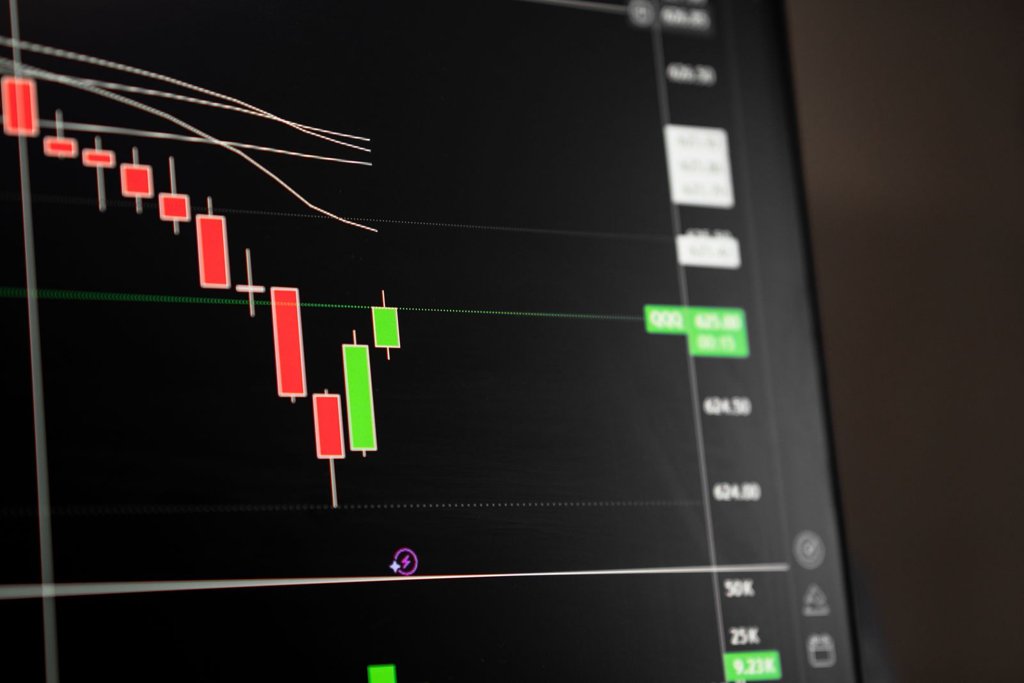
Many senior executives believe they decide independently. Yet when every competitor enters the same market, every fund buys the same stock, or every board chases the same “trend,” standing apart is hard. Science offers a short answer: the brain registers disagreement with the group as an “error” and pulls us toward conformity, and in markets, guessing what others intend can draw us into riding a bubble. For leaders who pride themselves on independent thinking, this is uncomfortable, but it is also useful. Understanding this mechanism is the first step toward independent decisions.
Why does disagreeing with the crowd register as an error in the brain?
In 2009, Klucharev and colleagues showed in the journal Neuron that conforming to a group follows reinforcement-learning principles, similar to those seen in learning from reward and punishment. Participants judged the attractiveness of faces and were then shown the group’s opinion. Each time their judgment diverged from the group’s, the rostral cingulate zone and the ventral striatum showed a response resembling a “prediction error signal”; and the larger the signal, the more the person shifted toward the group’s view in the next judgment. Put simply, the brain records disagreement with the crowd as a mistake that needs correcting. For an executive, the implication is that the pull toward the group’s view is not a failure of character; it is the brain’s learning machinery at work, treating distance from the group as something to be fixed.
In a crowd that is rushing, standing still is harder than running — Photo: ClickerHappy / Pexels
How does herd behavior build a financial bubble?
In 2013, in the same journal, De Martino, O’Doherty, Ray, Bossaerts and Camerer reported placing participants in an experimental market where the asset price sat far above its fundamental value; in other words, a bubble. The researchers showed that social signals processed in the dorsomedial prefrontal cortex influence value computation in the ventromedial prefrontal cortex. These regions tracked the intensity of order flow and used it to infer the intentions of other traders. The result: the same theory of mind (the ability to infer others’ intentions) that is an asset in social life made individuals in a complex market prone to riding the bubble and losing money.
This finding carries a clear message for fund managers and CFOs. When a decision leans more on guessing what others think than on fundamental value, bubble risk rises. Both studies were laboratory experiments; generalizing them directly to real markets and the boardroom is [needs further review]. In practical terms, the warning applies wherever a price or a strategy is justified mainly by the fact that others have already embraced it.
A bubble inflated by guessing other minds usually bursts just as fast — Photo: Alex Luna / Pexels
What did Freud say about the psychology of the crowd?
In Group Psychology and the Analysis of the Ego (1921; Standard Edition, Vol. 18), Freud explained that the bond among members of a group is libidinal in nature: individuals place a shared object, usually a leader or an idea, in the position of their own ego ideal, and through this they identify with one another. For this reason, emotions intensify in a group and individual judgment fades. This insight deepens the brain-imaging findings: the force of conformity is not merely a calculation of risk; it is a need for belonging and connection with the group. A rising market, an industry where everyone talks about one technology, or a charismatic CEO can serve as that shared ego ideal.
A leader who does not recognize this bond in themselves calls following the crowd “the wisdom of the market.” A leader who does can both harness the group’s energy and keep their own judgment. Recognizing the bond is what turns an unconscious pull into something a leadership team can discuss and manage.
What can executives do?
Independent judgment before seeing the crowd’s view: Every board or investment committee member writes down their own assessment before the meeting. This reduces the group’s influence on each assessment.
Separate fundamental value from the crowd signal: In every investment proposal, write two distinct columns: “fundamental value” and “what others are doing.” This keeps the crowd’s signal visible as a separate input.
A formal dissenting role: One person is assigned to argue against the consensus to reduce the social cost of dissent.
Identify the shared ideal: Ask who or what idea has taken the place of the group’s ego ideal. Naming it makes the group’s emotional anchor visible.
Conformity is not a moral flaw; it is a deep mechanism of the brain and mind with important social functions. Research shows that in markets this force can build bubbles, and Freud showed that its root lies in an emotional bond with the group. A leader who understands this can, through a sound decision-making structure, draw on the wisdom of the crowd while staying protected from its folly. The goal is not to resist the group at every turn, but to belong to it with open eyes. Seen this way, the same capacity that draws us toward the crowd can be directed toward better decisions.
Looking for professional support with your relationship or mental health?
Klucharev V, Hytönen K, Rijpkema M, Smidts A, Fernández G. Reinforcement learning signal predicts social conformity. Neuron. 2009;61(1):140-51. PMID: 19146819. DOI: 10.1016/j.neuron.2008.11.027
De Martino B, O’Doherty JP, Ray D, Bossaerts P, Camerer C. In the mind of the market: theory of mind biases value computation during financial bubbles. Neuron. 2013;79(6):1222-31. PMID: 24050407. DOI: 10.1016/j.neuron.2013.07.003
Freud S. (1921). Group Psychology and the Analysis of the Ego. In: Strachey J, ed. The Standard Edition of the Complete Psychological Works of Sigmund Freud, Vol. 18. London: Hogarth Press: 65-143.
Image Credits
Featured image — Photo: Pixabay / Pexels · In-text images — Photo: ClickerHappy / Pexels; Photo: Alex Luna / Pexels.